Geeta Rabari: Superhit Songs, Age, Family, Rona Ser Ma & Live Dayro Biography
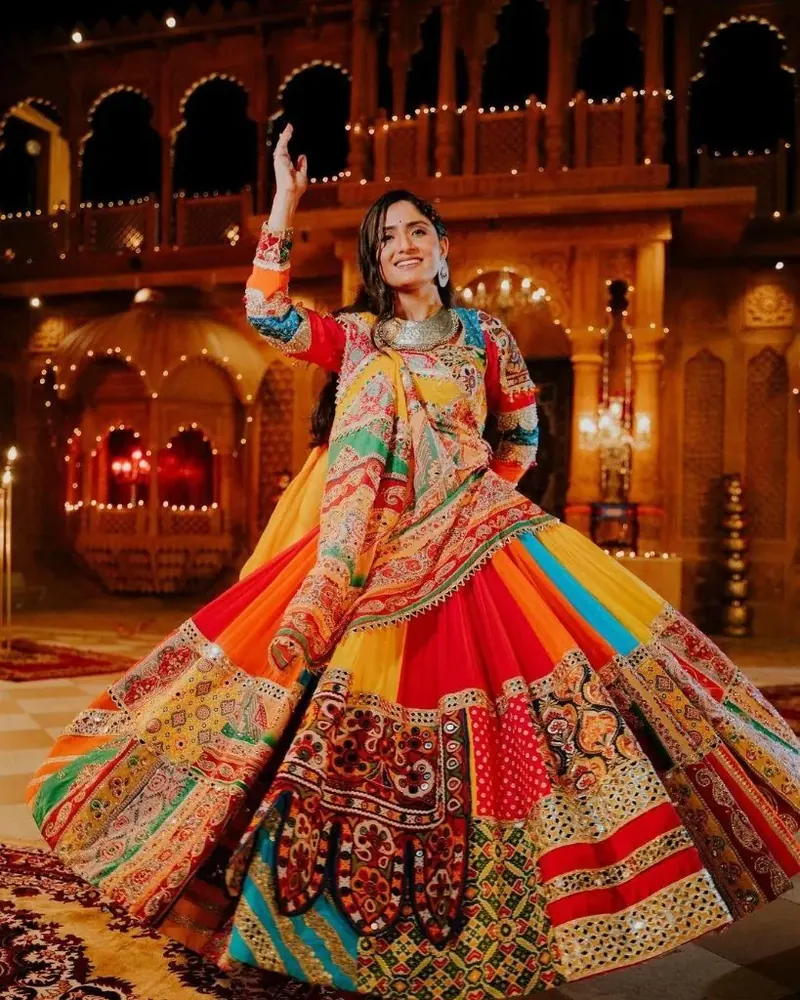
Geeta Rabari (ગીતા રબારી) — Quick Biography & Personal Dossier
The Icon of Gujarat: Introduction & Cultural Stature
Revered affectionately across millions of households as the "Kutchi Koyal" (કચ્છી કોયલ - The Nightingale of Kutch), Geeta Rabari represents one of the most inspirational, meteoric, and transformative success stories in the modern annals of Indian folk music. Rising from an impoverished, remote desert village with no electricity to commanding standing ovations at premier international arenas in London, New York, Toronto, and Sydney, Geeta Rabari’s crystalline vocal register, unpretentious humility, and fierce devotion to traditional pastoral roots have redefined regional music for a global generation.
With over 2 billion aggregate views across streaming platforms, chart-shattering viral anthems like "Rona Serma Re" and "Mahadev", and a presence that bridges sacred temple bhajans with electrifying diaspora stadium concerts, Geeta Rabari is not merely a folk performer; she is a living symbol of feminine grit, cultural preservation, and the triumphant power of Gujarati folk art.
Early Childhood, Village Roots & The Formative Struggles
Geeta Rabari was born on 31 December 1996 into an economically marginalized pastoral family in the remote desert hamlet of Tappar village, situated in the Anjar taluka of Kutch district, Gujarat. Belied by the stark, arid salt plains of her surroundings, Geeta was born into the traditional Rabari community, known historically for cattle breeding, camel husbandry, and vibrant hand-embroidered textiles. Her father, Kanabhai Rabari, suffered from severe physical disability due to a chronic spinal ailment, making consistent daily wage labor near impossible, while her mother, Venuben, worked grueling hours doing domestic chores in neighboring villages to put basic rotlas on the family plate.
Growing up in a modest traditional mud hut (ભૂંગો - Bhunga), the family lacked basic amenities such as domestic electricity and piped drinking water. During the devastating 2001 Gujarat earthquake that decimated Kutch, their humble dwelling collapsed, forcing the family into years of severe displacement and poverty. Despite these overwhelming hardships, Geeta discovered solace in the rich oral folk singing traditions of her community. Blessed with a naturally gifted, pitch-perfect soprano voice, she began singing traditional lullabies and devotional bhajans at the tender age of seven, walking alongside her mother to village stepwells and grazing pastures.
Recognizing her prodigious talent, her village school teachers encouraged her to perform during morning prayer assemblies. When her father required urgent surgery, local village elders organized a modest neighborhood bhajan gathering where the nine-year-old Geeta sang through the night. The small donations collected from villagers funded her father’s medication, instilling in young Geeta a lifelong realization: her voice was a sacred divine gift intended to uplift and protect her family.
The Historic Breakthrough & Rise to Stardom
Throughout her teenage years, Geeta honed her vocal stamina by performing at village Dayros (ડાયરો - traditional night-long musical storytelling sessions) across Saurashtra and North Gujarat. Traveling in cramped state-transport buses alongside veteran folk masters, she learned the subtle intricacies of Gujarati bardic poetry, saint literature (Santwani), and rhythmic improvisations. However, mainstream commercial recognition eluded her until 2017.

In early 2017, music producer and director Maulik Mehta alongside lyricist Devraj Adroj collaborated with Geeta to record an energetic, grassroots folk anthem titled "Rona Serma Re" (રોણા શેરમાં રે - Our Grandeur in the City) under the Raghav Digital label. Rooted in the pride of rural youth entering urban spaces with self-respect, the song struck a cultural nerve with volcanic force. Upon its release on YouTube, the track exploded into an unprecedented viral phenomenon, clocking tens of millions of views within weeks.
From village tea stalls and auto-rickshaws to lavish wedding celebrations and high-end Ahmedabad nightclubs, "Rona Serma Re" was played everywhere. The song catapulted the twenty-year-old village girl into a statewide and national celebrity overnight. It went on to cross over 500 million views, becoming the most viewed Gujarati music video of its era. This was swiftly followed by the transcendental devotional hymn "Mahadev" and "Mataji Na Dakla", which cemented her reputation not as a one-hit wonder, but as an unstoppable musical powerhouse.
Artistic Mastery, Cinematic & Musical Dominance
What sets Geeta Rabari apart from contemporary pop artists is her unwavering refusal to dilute her traditional cultural identity. While modern regional music frequently succumbs to auto-tuned western beats and flashy electronic synths, Geeta anchors her arrangements around authentic Gujarati percussion: the raw resonance of the Dholak, Kansijoda (brass cymbals), Manjira, and the earthen Ghado (pot). Her high-octane live vocal stamina allows her to sing continuously for six to eight hours during Navratri and nocturnal Dayro sessions without a hint of vocal strain or pitch deviation.

Her musical versatility spans three distinct pillars: Santwani & Bhajans (singing the profound metaphysical compositions of Kabir, Narsinh Mehta, and Gangasati), Lok Sahitya & Dayro (narrating historic tales of chivalry, sacrifice, and Saurashtrian folk heroes), and Festive Garba & Pop Singles. Renowned music directors Sachin-Jigar tapped into her unique tone for the hit track "Valamiya 2.0", demonstrating that her voice possesses the sophisticated flexibility to elevate mainstream film soundtracks.
Major Career Milestones, Blockbusters & Hit Discography
| Year | Title / Release | Category / Role | Impact & Recognition |
|---|---|---|---|
| 2017 | Rona Serma Re (રોણા શેરમાં રે) | Breakthrough Single | Over 500 Million YouTube views, cultural phenomenon across India. |
| 2018 | Mahadev (મહાદેવ) | Devotional Anthem | Shivratri chart-topper crossing 250M+ digital streams worldwide. |
| 2019 | Maa Tara Aashirvad (મા તારા આશીર્વાદ) | Folk Devotional | Iconic temple hymn sung across Gujarat and diaspora gatherings. |
| 2020 | Valamiya 2.0 (વ્હાલમિયા ૨.૦) | Modern Folk-Pop Fusion | Collaboration with Sachin-Jigar celebrating romantic Gujarati lyrics. |
| 2022 | Kesariyo (કેસરીયો) | Navratri Garba Single | High-energy festive anthem dominating United States garba arenas. |
| 2024 | Dhamak Dhamak (ધમક ધમક) | Cultural Folk Single | Celebration of Kutch pastoral traditions and Rabari community pride. |
National & Global Stage Dominance and Live Concerts
Geeta Rabari’s fame quickly transcended regional boundaries, establishing her as an international ambassador for Gujarati folk heritage across the global Indian diaspora. She has headlined extensive stadium tours across the United States, performing to tens of thousands of Gujarati families in major hubs like New Jersey, Chicago, Houston, Dallas, Los Angeles, and Atlanta. Her European tours across the United Kingdom—particularly historic sold-out concerts at Wembley and Leicester—saw multiple generations of British-Gujaratis celebrating their desert roots.
In 2021, during a celebrated cultural exchange in New Delhi, she was personally invited to perform traditional bhajans before Prime Minister Narendra Modi, who praised her journey from a remote Kutch village to international acclaim as an exemplary symbol of Beti Bachao, Beti Padhao and grassroots cultural excellence.
Artistic Method, Craftsmanship & Creative Philosophy
Geeta Rabari’s vocal methodology is an organic inheritance of pastoral Kutchi culture. Unlike studio vocalists who depend on digital tuning or autotune, Geeta practices traditional open-air vocal projection perfected through years of singing across the vast windswept salt plains of Kutch. Her vocal cords produce a resonant chest-voice frequency (*Gharado*) that can carry over hundreds of meters without amplification. When performing all-night Santvani and Dayro sessions lasting until dawn, she sustains intense spiritual devotion (*Bhakti Bhav*) through disciplined breath control inherited from generations of Maldhari devotional bards.
During studio sessions for viral singles like "Rona Ser Ma" and "Mahadev", she insists on tracking live harmonium and acoustic dholak accompaniment alongside modern synthesizers. She believes that Gujarati folk melody loses its organic soul if stripped of physical percussive resonance, ensuring that her recordings retain the earthy, festive spirit of village fairs.
Social Philanthropy & Impact on Gujarati Culture
Beyond her global stage presence, Geeta Rabari is a revered social changemaker among rural communities in Western Gujarat. Remembering her impoverished childhood in Tappar village where basic school books were an unaffordable luxury, she established dedicated educational scholarships for young girls from nomadic and pastoral backgrounds. She has funded modern computer laboratories, sanitation facilities, and science libraries in rural Kutch schools, actively motivating traditional village elders to prioritize women’s higher education.
Additionally, Geeta frequently donates entire concert revenues to animal welfare trusts, drought relief drives, and gaushalas caring for indigenous Kankrej and Gir cattle breeds, demonstrating an unwavering commitment to the pastoral community that nurtured her talent.
Personal Life, Family Values, Lifestyle & Social Causes
Despite her colossal commercial success, Geeta Rabari maintains an extraordinarily grounded, traditional lifestyle. In 2019, she tied the knot with Prithvidan Gadhvi in an intimate, culturally authentic Rabari wedding ceremony in Kutch. Prithvidan, who belongs to the esteemed Gadhvi-Charan literary community, actively supports her musical career and manages her extensive international touring logistics.
Firmly committed to giving back to her native soil, Geeta has invested significant portions of her earnings into philanthropic initiatives in rural Kutch. She established an educational trust that provides scholarships, uniforms, and textbooks to underprivileged girls in Anjar and Bhuj talukas, ensuring that children from cattle-breeding families do not have to abandon their schooling due to poverty. She also actively champions the preservation of traditional Kutchi hand embroidery, wearing hand-stitched attire made by elderly rural women during her global stage appearances to promote their artisanal livelihood.
Cultural Legacy & Lasting Influence on Modern Gujarat
Geeta Rabari’s rise to international stardom represents a historic cultural milestone for Gujarat’s nomadic Maldhari community. Wearing her traditional hand-embroidered Rabari choli, silver ornaments, and traditional tattoos (*Tragva*) on the grandest international stages—including prestigious auditoriums across New York, London, Dubai, and Sydney—she transformed traditional pastoral attire into a proud global symbol of cultural authenticity.
Her music serves as a living bridge connecting contemporary tech-savvy urban youth with ancient medieval bhajans written by mystic poets like Mirabai, Kabir, and Gangasati, ensuring that centuries-old oral literature flourishes vibrantly in the digital age.
Industry Leadership, Philosophy & Mentorship of Youth
In industry panels and youth cultural conclaves, Geeta advocates fiercely for fair digital royalty distribution for rural folk instrumentalists. She frequently employs traditional folk players—musicians who master rare instruments like the Morchang, Surando, and Jodiya Pawa—introducing their craftsmanship to mainstream international music labels.
She cautions aspiring singers against chasing fleeting social media virality through superficial remixes, advising: "A trend lasts for forty-eight hours on an algorithm, but an authentic folk melody rooted in your soil lives for forty generations in human hearts."
INSIDZ Special Spotlight & Future Creative Trajectory
Looking ahead into the 2026 international concert calendar, Geeta Rabari is mounting an ambitious symphonic folk world tour titled "Kutch to the World." Collaborating with international string quartets and world-music percussionists, the project aims to present classical Santvani and mystic Sufi poetry in premier concert halls across North America, Europe, and Japan. Industry observers note that her evolving musical trajectory transcends commercial playback singing, establishing her as an enduring cultural ambassador who carries the sacred soul of Gujarat onto the world stage with unparalleled dignity and creative grace.
Frequently Asked Questions & Fan Queries
Q1: What is Geeta Rabari’s real age and date of birth?
Geeta Rabari was born on 31 December 1996 in Tappar village, Kutch. As of 2026, she is 29 years old.
Q2: Who is Geeta Rabari’s husband?
Geeta Rabari is married to Prithvidan Gadhvi. The couple tied the knot in 2019 in Kutch according to traditional customs.
Q3: What was Geeta Rabari’s first breakthrough superhit song?
Her breakthrough track was "Rona Serma Re" released in 2017, which crossed over 500 million views on YouTube and transformed her into an international superstar.
Q4: What is Geeta Rabari’s estimated net worth?
As of 2026, her estimated net worth is approximately ₹18 to ₹22 Crore, accumulated through high-profile live concert tours in the US, UK, and India, digital streaming royalties, and brand endorsements.
Q5: Why is Geeta Rabari called the "Kutchi Koyal"?
"Kutchi Koyal" translates to "The Nightingale of Kutch," a title conferred upon her by folk music lovers and regional scholars honoring her sweet, high-pitched, melodic voice that mirrors the native bird songs of the Kutch desert.
Q6: How much education did Geeta Rabari complete?
Due to severe family financial constraints, Geeta completed her schooling up to the 10th standard in her village school in Tappar before dedicating herself entirely to professional singing to support her ailing father.
Q7: Which international countries has Geeta Rabari toured for live concerts?
Geeta Rabari has performed sold-out concerts across the United States, the United Kingdom, Canada, Australia, New Zealand, Kenya, and the United Arab Emirates.
Q8: What are Geeta Rabari’s most popular spiritual and devotional songs?
Her most popular devotional tracks include "Mahadev", "Maa Tara Aashirvad", "Mataji Na Dakla", and "Ramdevpir Bhajan", each garnering tens of millions of views across global devotional playlists.
INSIDZ Editorial Tribute & Cultural Legacy
From a dilapidated mud hut in the desert sands of Tappar to the grandest concert halls of London and New York, Geeta Rabari represents the unyielding spirit of Gujarat. Unpretentious, profoundly talented, and fiercely loyal to her heritage, she continues to illuminate the global stage with the eternal light of Kutchi folk art.

Laptop Battery
⚡ ૧ વર્ષ પૂરી વોરંટીબધી બ્રાન્ડની ઓરિજિનલ બેટરી • ૧ વર્ષ પૂરી વોરંટી • ₹0 વિઝિટિંગ & ફિટિંગ
Published by INSIDZ Admin
સંબંધિત સમાચારો & વધુ વાર્તાઓ (RECOMMENDED READS)
 ગુજરાતી સેલિબ્રિટીઝ
Janki Bodiwala: Movies, Age, Husband Status, Height, Net Worth & Shaitaan Fame
10 min readવાંચો → ગુજરાતી સેલિબ્રિટીઝ
Malhar Thakar: Movies, Age, Wife Pooja Joshi Wedding, Net Worth & Biography
9 min readવાંચો → ગુજરાતી સેલિબ્રિટીઝ
Yash Soni: Movies, Age, Biography, ₹100-Cr Box Office Hits & Personal Life
11 min readવાંચો → ગુજરાતી સેલિબ્રિટીઝ