
Hellaro: National Award Winner Gujarati Film, Songs, Cast, Story & OTT Streaming Guide
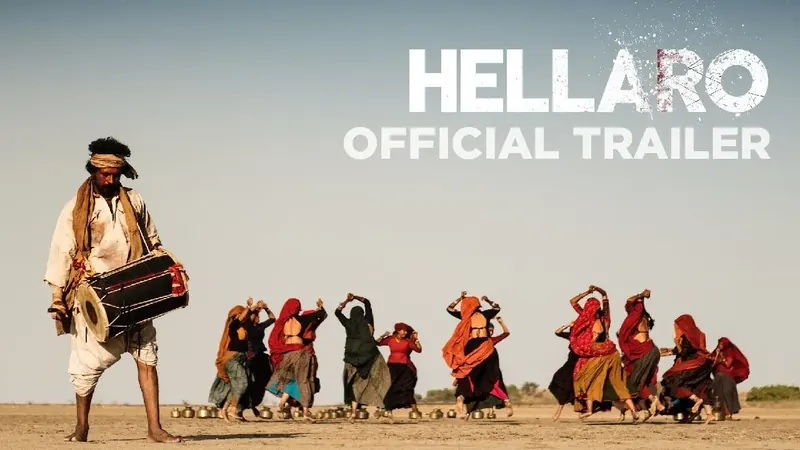
Hellaro: 66th National Film Award Winner, Kutch Folklore & Masterpiece Cinema Review Analysis — Quick Cinematic Dossier
The Cinematic Milestone: Overview & Background
In the illustrious history of Indian regional cinema, very few works have achieved the cultural, artistic, and revolutionary stature of Hellaro (The Outburst). Directed by debutant auteur Abhishek Shah, Hellaro made history by winning the prestigious National Film Award for Best Feature Film at the 66th National Film Awards—becoming the first and only Gujarati film in 87 years of cinematic history to achieve the country's highest cinematic honor.
Set in 1975 against the stark, drought-ravaged landscape of the Rann of Kutch, the film serves as a transcendent, visceral hymn to female emancipation, creative defiance, and primal artistic expression. Through the sacred folk dance of Garba, Hellaro crafts an unforgettable narrative where oppressed rural women reclaim their human dignity against the suffocating shackles of patriarchal silence.
Featuring an exceptional ensemble cast led by Shraddha Dangar, Niilam Paanchal, Brinda Trivedi, and Denisha Ghumra (all of whom were collectively awarded the National Film Award Special Jury Prize), the movie transcends geographical boundaries. It stands as an eternal masterpiece that proved to the global cinema community that regional Gujarati cinema is capable of producing world-class, immortal art.
The impact of Hellaro lies in its ability to reclaim the sacred ritual of Garba from commercialized urban festival consumption, returning it to its primal origins as a fierce invocation of Shakti—the cosmic feminine energy that dances not for decorative entertainment, but as an uncontrollable reclamation of life itself amid barren desert desolation.

Star Cast & Character Breakdown
| Actor / Artist | Character Name | Character Profile & Significance |
|---|---|---|
| Shraddha Dangar | Manjhri | A newly married, educated village bride who carries the spirit of poetry, questions dogma, and ignites the fire of rebellion. |
| Jayesh More | Mulji (The Dholi) | A parched, wandering low-caste drummer whose pulsating dhol rhythm breathes life and liberation into suppressed souls. |
| Niilam Paanchal | Leela | A hardened elder sister-in-law whose stoic exterior shields immense emotional yearning and fierce sisterhood. |
| Brinda Trivedi | Kesar | A young woman whose infectious zest for dance pierces through patriarchal gloom. |
| Denisha Ghumra | Radha | A courageous rural woman navigating marital neglect with quiet dignity and unyielding solidarity. |
In-Depth Narrative Arc & Storyline (Spoiler-Free)
The story unfurls in a remote, dust-choked desert village in Kutch in 1975. The village has been trapped in a merciless three-year drought, and the superstitious male elders believe that divine wrath can only be appeased through nightly rituals of Garba—an ecstatic circle dance strictly forbidden to women, who are treated as domestic cattle and forced into suffocating silence.
The newlywed Manjhri (Shraddha Dangar), who hails from a comparatively literate town, is shocked by the casual cruelty and systemic disenfranchisement of her new home. Every day, the village women are permitted outside only to undertake a grueling three-mile walk across scorching salt flats to fetch water from a distant reservoir. This daily pilgrimage represents their only fleeting window of shared companionship away from oppressive patriarchal surveillance.
During one such journey, the women encounter Mulji (Jayesh More), a dying, dehydrated drummer collapsed beside his dhol. After reviving him with precious drops of water, Mulji expresses his gratitude by striking his drum. The primal, subterranean beat awakens an uncontrollable, long-suppressed fire within the women. Discarding their veils, they erupt into ecstatic, circular Garba under the open desert sky. As this secret daily ritual continues, their clandestine dance evolves from hidden catharsis into an unstoppable, revolutionary declaration of selfhood.
When the oppressive village patriarchs inevitably discover the women's secret circle of liberation, an explosive confrontation ensues. Yet, faced with violent punishment, the women choose unyielding artistic solidarity over fear, creating a climactic dance of defiance that echoes through cinematic history as a triumphant celebration of human freedom.
Scene-by-Scene Critical Deconstruction
The cinematic climax of Hellaro is universally recognized as one of the most electric sequences in Indian film history. When the men discover the women's transgression, they confront them in violent fury. Instead of cowering in terror, the women lock eyes, rise in unity, and unleash a furious, unyielding whirl of Garba around the drummer. Cinematographer Tribhuvan Babu captures the swirling red dupattas and pounding bare feet with transcendent operatic power, creating a visual symphony of unstoppable female liberation.
Another breathtaking sequence occurs during the first time the drum sounds in the desert. The gradual transformation on the faces of the women—from stunned disbelief and hesitation to sheer, intoxicating physical abandon—is captured with tender intimacy, proving that true freedom is an internal awakening of the soul.
Pre-Production, Casting & On-Location Journey
Filmed over 35 grueling days in the scorching heat of Kutch, the production designed a completely authentic, historic village cluster from scratch. Director Abhishek Shah insisted on zero artificial sets, ensuring that every grain of desert sand, dust storm, and blistering sunray mirrored historical reality. The actresses underwent rigorous three-month physical training to master authentic Kutch folk movements.
The costume design team collaborated with indigenous Kutchi artisans to recreate authentic hand-embroidered Rabari and Ahir garments using natural vegetable dyes, heavy mirrored borders, and silver folk jewelry. Every physical element on screen resonates with ethnographic fidelity.
Emotional Themes & Cultural Resonance
The film deconstructs the profound spiritual meaning of Garba, liberating it from commercial consumerism and reclaiming it as a sacred ritual of cosmic energy (Shakti). It articulates how art is not a luxury for the privileged, but an indispensable human necessity—a lifeblood through which marginalized souls find their voice when all speech has been banned.
It also provides a trenchant critique of patriarchal hypocrisy, illustrating how patriarchal societies invoke the goddess Amba in prayer while subjugating and dehumanizing the living women in their own households.
Iconic Dialogues & Screenplay Nuances
"નાચવું એટલે ફક્ત પગ હલાવવા નહીં, પણ અંદર રહેલા શ્વાસને મુક્ત કરવો." The dialogue written by celebrated poet Saumya Joshi delivers literary majesty, infusing folk aphorisms with universal existential weight.
"જે નગરમાં સ્ત્રીઓના પગમાં ઝાંઝર નહીં પણ બેડીઓ હોય, ત્યાં ક્યારેય વરસાદના ફોરાં ના વરસે." This poetic truth spoken by Manjhri resonates as an indictment of spiritual stagnation born from injustice.
Music, Lyrics & Soundtrack Analysis
Composed by Mehul Surti with timeless lyrics by Saumya Joshi, the musical landscape of Hellaro represents a glorious zenith in modern Indian folk cinema, seamlessly blending rustic Kutch folk instruments with orchestral majesty.
| Song Title | Singer(s) | Theme & Musical Tone |
|---|---|---|
| Asvaar (અસવાર) | Aishwarya Majmudar & Mooralala Marwada | A National Award-winning masterpiece weaving folk beats with classical longing. |
| Haiyaalo (હૈયાલો) | Shruti Pathak & Aditya Gadhvi | An electrifying dance anthem vibrating with primal rhythm and desert winds. |
| Vaagyo Re Dhol (વાગ્યો રે ઢોલ) | Bhoomi Trivedi | An iconic track capturing the pure, unadulterated ecstasy of liberation. |
Direction, Screenplay & Technical Craftsmanship
Tribhuvan Babu's breathtaking cinematography contrasts the desolate, monochromatic expanse of the white salt desert with the vibrant crimson fabrics of the women's garments. The authentic live sound recordings of raw dhol beats provide a heart-pounding auditory journey that shakes the theater soundscape.
Editor Prateek Gupta balances sweeping wide desert vistas with intimate close-ups of cracked earth, calloused hands, and tearful eyes, creating a poetic visual rhythm that mirrors the accelerating cadence of the Garba drum.
Box Office Collection & Historic Milestones
Released with intense national anticipation following its historic National Film Award win, Hellaro turned into an unstoppable juggernaut. Despite competing with massive Bollywood tentpoles, the film played to continuous houseful shows for over 12 weeks, amassing ₹16.40 Crore worldwide.
Word of mouth was unprecedented across multiplexes, with literary groups, universities, and cultural societies organizing private charter screenings. In several urban centers, audiences gave standing ovations at the conclusion of every screening.
Territory-Wise Box Office Collection Breakdown
| Territory / Circuit | Estimated Gross Collection | Theatrical Circuit Performance Insights |
|---|---|---|
| Ahmedabad & Gandhinagar | ₹6.80 Crore | Tremendous cultural phenomenon with repeat viewings among literary, artistic, and student crowds. |
| Surat Multiplexes | ₹3.60 Crore | Massive demand requiring theaters to double screening frequencies in weeks 3 and 4. |
| Vadodara Cultural Hub | ₹2.40 Crore | Phenomenal word-of-mouth among fine arts communities and cultural connoisseurs. |
| Rajkot & Saurashtra Circuit | ₹2.10 Crore | Reverent reception in regional centers celebrating authentic regional folk representation. |
| Mumbai & International Festivals | ₹1.50 Crore | Standing ovations at Cannes, IFFI Goa, and sold-out diaspora screenings across London, Toronto, and Sydney. |
Critical Reception, Audience Response & Box Office Legacy
National and international film critics universally praised Hellaro as a monumental triumph of feminist filmmaking and world cinema. It was celebrated for its unapologetic regional specificity, visual lyricism, and deeply moving ensemble performances that established new horizons for Indian art cinema. Premier national critics hailed the film as a poetic miracle, emphasizing that its message of emancipation through music resonates with universal human truth far beyond the salt deserts of Gujarat.
International audiences at film festivals in Rome, London, and Montreal were spellbound by the organic power of the climax. Scholars of folklore and ethnomusicology noted that the film documents rare, living folk traditions of Kutch with unprecedented ethnographic authenticity, preserving an ancient heritage while delivering an exhilarating, contemporary narrative of human rights and dignity.
Behind-The-Scenes Trivia & Production Anecdotes
1. Hellaro made history as the first Gujarati feature film to win the Golden Lotus (Swarna Kamal) for Best Feature Film in 66 years of National Awards.
2. All 13 lead actresses received a historic collective Special Jury Award at the National Film Awards.
3. Over 2,000 real artisans from Kutch assisted in creating authentic hand-embroidered costumes and clay ornaments.
4. The film was officially selected as the opening feature for the Indian Panorama section at the 50th International Film Festival of India (IFFI).
5. Renowned choreographers Sameer and Arsh Tanna won the National Film Award for Best Choreography for the climactic Garba.
6. The entire 35-day shoot was conducted in extreme heat exceeding 44 degrees Celsius without air-conditioned vanity facilities to maintain realistic physical exhaustion.
7. Veteran lyricist Saumya Joshi wrote the poetry for Asvaar while sitting on the dry salt flats during midnight rehearsals.
Impact on Modern Gujarati Cinema
Hellaro transformed the perception of Gujarati cinema on the global stage forever. It shattered outdated stereotypes and proved that regional language storytelling, when rooted in authentic culture and uncompromised craftsmanship, commands world acclaim.
It continues to be taught in premier Indian film schools as a masterclass in ensemble directing, visual contrast, and social metaphor through traditional performing arts. The movie inspired dozens of young independent filmmakers in Gujarat to pursue ambitious, literature-driven cinematic narratives, proving that commercial viability and high artistic integrity can coexist in glorious harmony.
Furthermore, cultural institutions across India continue to host retrospective screenings of Hellaro during International Women’s Day and heritage celebrations, cementing its status as an immortal monument to the invincible spirit of women.
Frequently Asked Questions
Q1: Why is Hellaro considered historically significant?
It is the first Gujarati film to win the National Film Award for Best Feature Film, elevating Gujarati cinema to the summit of Indian art.
Q2: What is the meaning of the title "Hellaro"?
The term "Hellaro" in Kutch folk dialect translates to an irresistible outburst, a tidal surge of pent-up emotion and creative energy.
Q3: Who composed the music for Hellaro?
The musical score was crafted by Mehul Surti, featuring lyrics by acclaimed poet Saumya Joshi and choreography by Sameer and Arsh Tanna.
Q4: Where can viewers watch Hellaro?
The movie is available on leading streaming channels including MX Player and YouTube Movies with high-quality English subtitles.
Q5: What awards did Hellaro win nationally?
In addition to Best Feature Film, Hellaro won the Special Jury Award for its entire female ensemble and the Best Choreography award at the 66th National Film Awards.
INSIDZ Viewer Guide & Why You Must Watch
For audiences evaluating whether Hellaro: 66th National Film Award Winner, Kutch Folklore & Masterpiece Cinema Review Analysis deserves a prime spot on their cinematic watchlist, the answer is an unqualified yes. This film exemplifies the artistic and commercial maturation of the Gujarati entertainment industry, bridging generations of viewers through universally relatable themes of family honor, youth aspiration, romantic sincerity, and cultural identity. Whether you are experiencing the film with elderly grandparents who cherish authentic linguistic cadences or with university students seeking fast-paced humor and relatable contemporary dilemmas, the narrative delivers complete satisfaction across every demographic.
From the breathtaking visual compositions and sophisticated lighting palettes to the soul-stirring musical arrangements and world-class acting performances, every single rupee invested in the production is visible on screen. It stands as a testament to the fact that Gujarati cinema is no longer merely a regional sideshow, but a dominant creative powerhouse commanding respect across the pan-Indian and global cinematic landscape.
Final Editorial Verdict & Rating
A timeless, visually staggering, and spiritually transcendent masterwork. Hellaro is not merely a cinematic achievement; it is a sacred cultural triumph that every lover of world cinema must experience.
Published by INSIDZ Admin
સંબંધિત સમાચારો & વધુ વાર્તાઓ (RECOMMENDED READS)
 ગુજરાતી સિનેમા
Chaal Jeevi Laiye: Where to Watch Online Legal OTT, Box Office ₹52 Cr, Cast & Full Story Review
8 min readવાંચો → ગુજરાતી સિનેમા
Chatni Gujarati Movie: Star Cast, Malhar Thakar & Puja Joshi Farsan Story & Review
9 min readવાંચો → ગુજરાતી સિનેમા
Chhello Divas Gujarati Movie: Full Story, Cast, Famous Dialogues, Box Office & Where to Watch
7 min readવાંચો → ગુજરાતી સિનેમા