
Gir National Park Lion Safari & Somnath Temple: 12 Best Places to Visit & Wildlife Guide
Gir National Park Lion Safari & Somnath Temple: 12 Best Places to Visit & Wildlife Guide — Quick Traveler Dossier
Destination Overview & Historical Heritage
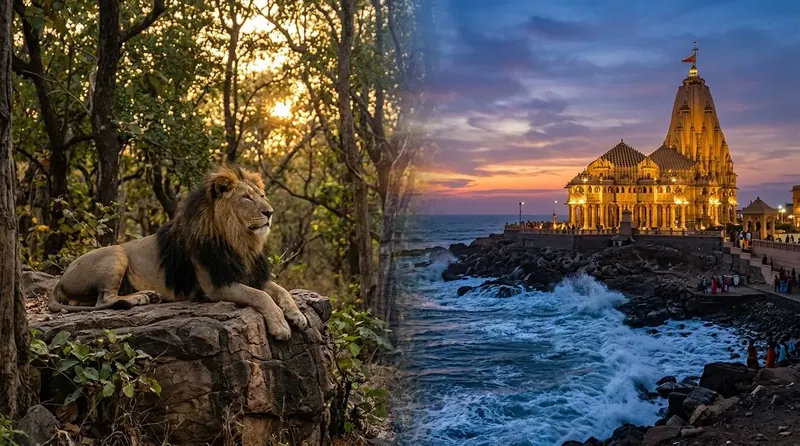
Spanning the rugged hills, dry deciduous teak forests, and coastal horizons of southern Saurashtra, the legendary circuit of Gir National Park and Somnath presents one of the most powerful journeys anywhere in the world. It is a rare landscape where primordial wilderness coexists with eternal spiritual devotion: within an hour’s drive, travelers can transition from tracking the majestic Asiatic Lion in its only wild habitat on earth to standing before the sacred oceanfront spires of the Somnath Jyotirlinga—revered for millennia as the first and foremost of Lord Shiva's twelve holy light manifestations (Prathama Jyotirlinga).
Historically protected from extinction by the conservation foresight of the Nawab of Junagadh and vigorously nurtured by the Gujarat Forest Department, Gir is a global conservation miracle. From a critically endangered population of fewer than 20 lions at the turn of the 20th century, Gir now shelters over 674 wild Asiatic lions, roaming freely across a sprawling protected ecosystem of 1,412 square kilometers alongside dense populations of leopards, spotted deer (chital), sambar, nilgai, and over 300 exotic bird species.
Just 45 kilometers southwest along the churning waves of the Arabian Sea stands Somnath, the "Shrine Eternal." Razed and resurrected through seven historic cycles of destruction and rebirth, the present golden-hued sand-stone temple was reconstructed after India’s independence under the inspiring leadership of Sardar Vallabhbhai Patel. Overlooking the limitless expanse of the southern ocean, Somnath radiates an aura of unconquerable spiritual immortality.
Together with the nearby pastoral settlements of the indigenous Maldhari pastoralists, the poignant mythological shrine of Bhalka Tirth where Lord Krishna completed his earthly lila, and the historic stepwells and fortresses of nearby Junagadh, the Gir-Somnath circuit offers an unforgettable, humanized travel experience that captivates nature photographers, wildlife lovers, and cultural pilgrims alike.

Top Places to Visit & Major Attractions
1. Gir National Park Open Gypsy Lion Safari
Location & Significance: Sasan Gir, Junagadh & Gir Somnath Districts
The ultimate wildlife highlight of the region is the open-top 4x4 Gypsy safari into the core wilderness of Gir National Park. Accompanied by experienced forest department naturalists and licensed tribal trackers, visitors traverse rugged dirt tracks winding through golden teak canopies, rocky riverbeds of the Hiran and Machhundri rivers, and dry grasslands.
Unlike their African counterparts, Asiatic lions (Panthera leo persica) feature a distinctive longitudinal fold of skin running along their belly, slightly smaller manes, and thicker tail tufts. Safaris operate in three daily slots (6:00 AM, 9:00 AM, and 3:00 PM) across eight designated jungle routes. Early morning safaris offer prime opportunities to spot lion prides resting on dust roads, listening to the alarm barks of langurs and chital deer alerting the forest to a prowling predator.

2. Devalia Safari Park (Gir Interpretation Zone)
Location & Significance: 12 km from Sasan Gir Forest Headquarters
Created to reduce tourist pressure on the core forest while ensuring guaranteed wildlife sightings for visitors with limited time, Devalia Safari Park is a 412-hectare fenced mini-reserve replicating Gir's authentic habitat. Within a 45-minute guided safari aboard air-conditioned forest department safari buses or open gypsies, travelers can view Asiatic lions, Indian leopards, large herds of spotted deer, and endangered blackbucks.

Devalia also houses an excellent wildlife interpretation museum, audio-visual theatre, and souvenir center, making it an essential, family-friendly wildlife excursion especially for elderly travelers and families traveling with young children.
3. Somnath Temple (The First Jyotirlinga of Lord Shiva)
Location & Significance: Prabhas Patan, on the seashore near Veraval
Standing majestically at the confluence of three sacred rivers (Hiran, Kapila, and Saraswati) and the Arabian Sea (Triveni Sangam), Somnath Temple is the premier pilgrimage destination of Saurashtra. Built in the grand Kailash Mahameru Prasad style of Chalukyan architecture, the temple spire rises 155 feet high, crowned by a massive 10-tonne flag mast and a golden kalash.
The sanctum houses the venerable Jyotirlinga, adorned with precious silks and flowers. A famous Sanskrit inscription on the temple's Baan Stambh (Arrow Pillar) notes that from this precise coastal point on the seashore, there is no obstruction of land all the way south to the continent of Antarctica. The morning and evening Sandhya Aarti, accompanied by the thunderous roar of ocean waves crashing against the temple's fortified sea wall, provides an awe-inspiring spiritual experience.
4. Somnath Sound and Light Show (Jay Somnath)
Location & Significance: Sea-facing amphitheater behind Somnath Temple
Every evening at 8:00 PM, the dramatic history of Somnath is brought to life through the acclaimed Sound and Light Show. Projected onto the stone facade of the temple against the dark night sea, the 45-minute narrative, famously voiced by megastar Amitabh Bachchan, chronicles the temple's legendary origins, its repeated sackings by invaders, and its glorious resurrection as a symbol of India's unconquerable spirit.
5. Bhalka Tirth & Dehotsarg Tirth
Location & Significance: 4 km from Somnath on the highway to Veraval
Bhalka Tirth is the sacred mythological grove where Lord Krishna rested under a banyan tree when a hunter named Jara accidentally shot an arrow into his foot, mistaking his divine footprint for a deer. The temple houses a serene white marble idol depicting Krishna in a reclining posture under the sacred tree.
A short distance away at the Triveni Sangam lies Dehotsarg Tirth, where Lord Krishna is believed to have departed his mortal body to return to his heavenly abode Vaikuntha, marking the conclusion of the Dvapara Yuga and the onset of the current Kali Yuga. It remains an essential pilgrimage stop for devotees from around the world.
6. Crocodile Breeding Centre & Kamleshwar Dam
Location & Significance: Inside the core area of Gir Sanctuary
Located along the Hiran River near Sasan Gir, the Crocodile Rearing Centre is an important conservation facility dedicated to breeding and rehabilitating marsh mugger crocodiles (Crocodylus palustris). Nearby lies the picturesque Kamleshwar Dam, often referred to as the "lifeline of Gir," whose scenic reservoir serves as the premier birdwatching habitat for migratory pelicans, flamingos, and kingfishers.
7. Maldhari Tribal Settlements (Nesses)
Location & Significance: Forest fringes of Gir Sanctuary
The Maldharis are traditional nomadic pastoral communities who have coexisted symbiotically with Asiatic lions inside Gir for over two centuries. Living in traditional fenced mud-and-thatch circular compounds called Nesses, the Maldharis rear indigenous Gir cattle and Jaffarabadi buffaloes, demonstrating a legendary ethos of courage and reverence for the forest predators that has drawn international anthropologists and wildlife documentary filmmakers.
Suggested Day-by-Day Travel Itinerary
| Day | Focus Area | Recommended Plan & Activities |
|---|---|---|
| Day 1: Arrival & Sasan Gir Safaris | Tracking the Asiatic Lion | Morning arrival at Sasan Gir. Check-in at jungle resort. Afternoon 3:00 PM open Gypsy safari into Gir core zone to track Asiatic lions and leopards. Evening folk dance (Siddi Dhamal) performance around the campfire at the lodge. |
| Day 2: Devalia & Journey to Somnath | Mini Safari & Oceanfront Jyotirlinga | Early morning 6:00 AM second safari in a different Gir zone. 10:30 AM visit to Devalia Safari Park. Afternoon 1.5-hour drive to Somnath. Check-in and evening Darshan at Somnath Jyotirlinga. Attend the grand Sandhya Aarti and the 8:00 PM Amitabh Bachchan Sound and Light Show. |
| Day 3: Sacred Pilgrimage & Departure | Bhalka Tirth & Triveni Sangam | Morning visit to Bhalka Tirth, Dehotsarg Tirth, and Triveni Sangam ghats. Explore the Veraval fishing harbour and local handicraft markets before heading to Keshod or Rajkot Airport for departure. |
Local Cuisine, Street Food & Cultural Experiences
The Gir-Somnath region offers an unforgettable taste of rustic Saurashtrian and Kathiyawadi cuisine. In Sasan Gir and surrounding highway dhabas, meals are cooked over open wood fires using cold-pressed peanut oil and freshly ground spices. Visitors must relish Kathiyawadi Sev Khamani, authentic Ringan no Olo (fire-roasted eggplant mash seasoned with green garlic), piping-hot Bajra na Rotla slathered in white butter, and fiery garlic chutney served in fresh clay bowls.
In Somnath and Veraval, temple dining halls serve peaceful pure vegetarian satvik meals, accompanied by sweet Shrikhand and cooling Chaas. Culturally, evening entertainment in Gir frequently features the exhilarating Siddi Dhamal Dance—a high-energy acrobatic tribal dance performed by the Siddis, an indigenous community of East African descent who settled in Gujarat over eight centuries ago and have preserved their unique percussive music and cultural traditions.
How to Reach, Transportation & Local Transit
Reaching the Gir-Somnath circuit has become remarkably convenient thanks to upgraded regional infrastructure. For air travelers, Keshod Airport (IXK) is situated just 50 km from Sasan Gir (approx. 1 hour drive) and 60 km from Somnath, operating regular commercial scheduled flights to Mumbai. Alternatively, the newly opened Rajkot International Airport at Hirasar (HSR) is located 160 km away, offering comprehensive flight links to major metros across India.
By rail, Veraval Junction (VRL), located just 7 km from Somnath, is a bustling broad-gauge railway terminal with direct express trains connecting Ahmedabad, Mumbai, Pune, Jabalpur, and Delhi. Sasan Gir also has its own scenic heritage meter-gauge / broad-gauge railway station (SASN) connecting Junagadh and Delvada. Smooth, four-lane coastal and interior highways ensure comfortable driving conditions between Gir, Somnath, Diu (85 km), and Junagadh (55 km).
Best Season to Visit & Climate Guide
Gir National Park is open for tourism from 16 October to 15 June each year, remaining strictly closed during the monsoon breeding months (16 June to 15 October). The optimal time to visit both Gir and Somnath is during the winter season from November through March, when pleasant temperatures ranging between 12°C and 26°C make open Gypsy safaris and coastal monument walks delightful.
For dedicated wildlife photographers, the warmer summer months of April and May provide the highest likelihood of seeing lions, as sparse vegetation and drying forest waterholes force wildlife to congregate near perennial rivers and artificial water troughs. Meanwhile, Somnath Temple remains open for pilgrims 365 days a year, with massive devotional celebrations during the festival of Maha Shivratri in February or March.
Essential Travel Tips, Timings & Entry Regulations
1. Mandatory Online Safari Booking: Gir National Park safari permits MUST be booked well in advance (up to 90 days prior) through the official Gujarat Forest Department portal (www.girlion.gujarat.gov.in). On-the-spot permits are NOT issued at Sasan Gir.
2. Original Photo ID: Every traveler must carry the EXACT original government photo ID (Aadhaar or Passport) entered during the online safari booking, as forest rangers verify details before permit issuance.
3. Safari Clothing: Wear muted, earth-toned clothing (khaki, olive green, brown, or beige) during safaris. Avoid bright red, yellow, or white clothes, and avoid strong perfumes that disturb wildlife.
4. Somnath Temple Security: Mobile phones, electronic smart devices, cameras, belts, and tobacco are strictly prohibited inside the Somnath temple complex. Secure electronic locker facilities are available outside.
5. Combined Circuit: Combine Gir and Somnath with the Portuguese coastal island of Diu (85 km from Somnath) or the historic hill fortress of Junagadh (55 km from Gir) for a complete 4-day holiday.
Frequently Asked Questions
Q1: How do I book an Asiatic Lion safari in Gir National Park?
Safaris must be booked through the official government portal (girlion.gujarat.gov.in). Booking opens 90 days in advance; each Gypsy permit covers up to 6 adults plus one child, along with a licensed driver and naturalist guide.
Q2: When is Gir National Park closed for tourists?
The core sanctuary of Gir National Park is closed annually during the monsoon breeding season from June 16 to October 15. However, Devalia Safari Park remains open year-round, except on Wednesdays.
Q3: What makes the Somnath Jyotirlinga unique among Hindu temples?
Somnath is celebrated as the "Prathama Jyotirlinga"—the very first of the twelve sacred light shrines of Lord Shiva. Located directly on the ocean shore, it has been rebuilt seven times across history.
Q4: How far is Somnath Temple from Sasan Gir?
Somnath is approximately 45 kilometers from Sasan Gir, requiring about 1 to 1.5 hours of scenic driving through Saurashtra's countryside.
Q5: What is the difference between Gir National Park and Devalia Safari Park?
Gir National Park is a vast 1,412 sq km open wilderness where wildlife roams freely across 8 rugged trails. Devalia is a 412-hectare fenced interpretation zone designed for guaranteed sightings in a 45-minute bus or gypsy ride.
Q6: Which airport is nearest to Sasan Gir and Somnath?
The nearest operational commercial airport is Keshod Airport (approx. 50 km from Gir and 60 km from Somnath), offering regular flights to Mumbai. Rajkot International Airport (160 km) provides broader domestic flight options.
Q7: What is the Siddi Dhamal dance performed near Gir?
Siddi Dhamal is an energetic traditional percussive folk dance performed by the Siddi community of African descent residing in Saurashtra for centuries, featuring rhythmic drumming and acrobatic fire stunts.
INSIDZ Travel Verdict & Why You Must Visit
The Gir-Somnath circuit is an extraordinary blend of royal wildlife majesty and timeless coastal spirituality. Tracking wild Asiatic lions at dawn and listening to the evening Aarti over the waves of Somnath is an unforgettable experience that defines the essence of Gujarat.

Published by INSIDZ Admin
સંબંધિત સમાચારો & વધુ વાર્તાઓ (RECOMMENDED READS)
 પ્રવાસન
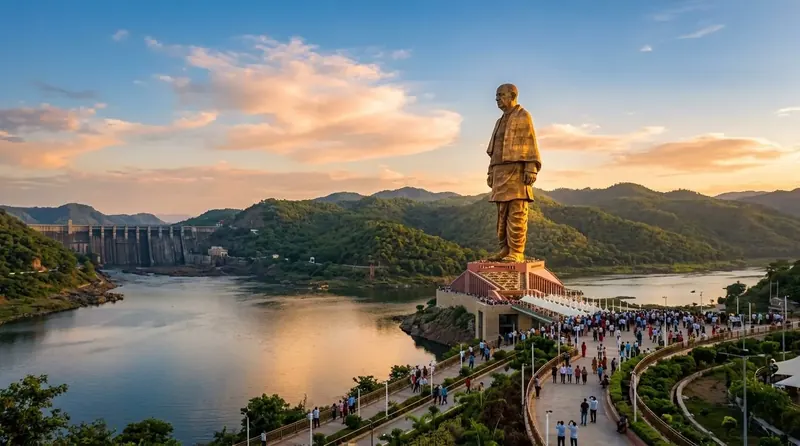
Statue of Unity: 15 Best Places to Visit in Ekta Nagar Kevadia, Viewing Gallery & Complete Travel Guide
10 min readવાંચો →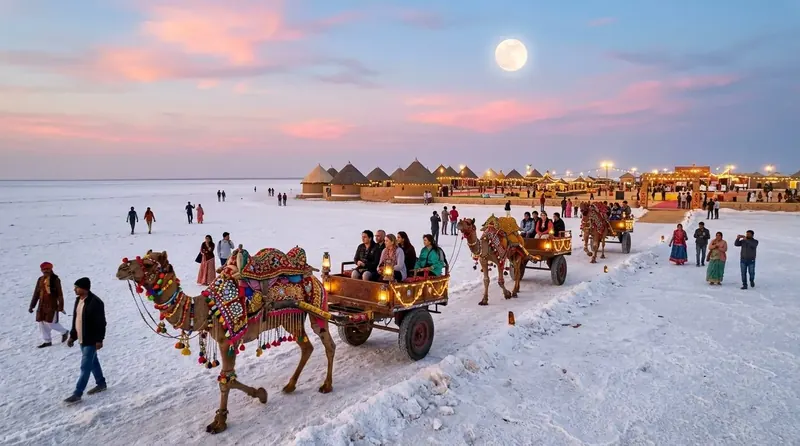 પ્રવાસન
Kutch Rann Utsav: 15 Best Places to Visit in White Desert, Bhuj, Dholavira & Complete Travel Guide
11 min readવાંચો →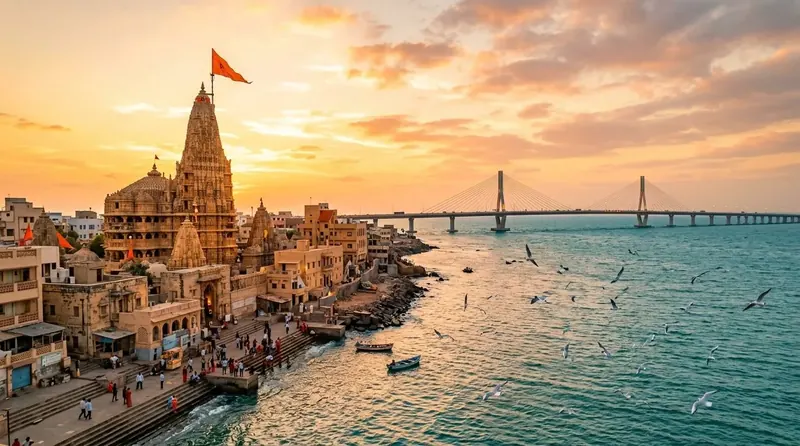 પ્રવાસન
Dwarka & Sudarshan Setu: 10 Best Places to Visit, Bet Dwarka, 52-Gaj Dhwaja & Complete Pilgrimage Guide
9 min readવાંચો → પ્રવાસન